
Last month, I spent a lot of time with HR and L&D professionals navigating enterprise AI transformation initiatives. I started October by convening a group of learning leaders across industries to talk about their major challenges.
Our opening round robin focused heavily on AI enablement efforts, and some common themes emerged: there’s a frenzy of activity, interest, and investment without a lot of visible ROI. Business objectives around AI aren’t always clearly articulated, making program design difficult. And technology adoption – even as a proxy – seems a poor metric of success.
It’s a difficult time to be a leader of people teams. The leaders I’ve talked with bring wisdom, experience, and a desire to help both the business and its employees succeed. Yet too often, they’re being asked to chase vague adoption or saturation metrics without a clear vision for how humans should and will work in an AI-transformed workplace.
At the very least, it would be reassuring for them to know they are helping to land changes that improve the organization, its people, or the quality of its work.
All of this has me thinking about my first lesson in technology transformation.
The processor fairy
I was fortunate to land a work-study job with Computer Operations for my last three years of undergrad. Most days, this job involved loading up a panel van with monitors, mice, and CPUs, and rumbling through campus, responding to washed-out work orders printed off a dot-matrix printer in our basement office.
Very little of my job was customer-facing. I had a set of master keys to the campus, and I mostly slipped into unoccupied administrator and professor offices, tweezing out disk covers caught in drives, or swapping out broken monitors and keyboards for clean and new ones. Occasionally we’d get a more rewarding challenge to solve, like fixing a fuzzy monitor by straightening out the pins on a VGA cable or moving a desk fan 6 inches farther from the display.
Once in a while, we’d have a campus-wide hardware or software upgrade, and my exposure to users would increase. One of these initiatives involved unpacking and configuring hundreds of new PCs, then going office-to-office, confiscating old machines and replacing them with brand new ones, like the processor fairy.
There was something deeply satisfying about replacing a hulking AT/PC with a “modern” PS/2. The old machines were heavy and always covered in dust inside and out. The new machines weighed less than half as much, replacing the dark grey boxes with cream-colored ones. The new ones also took up less desk real estate, providing ample room for the mouse and accompanying mousepad. While the floppy disk drives shrank from 5¼ to 3½ inches, the hard disk exploded from 20 to an extravagant 85 megabytes. I always felt heroic wheeling off the old PCs and leaving behind the new.
Who wouldn’t want WordPerfect?
As part of one major replacement, users inherited a whole new suite of software. Instead of booting up to an orange-on-black DOS prompt, they got a Windows desktop and cursor. They also got WordPerfect, the powerful word processor we’d preloaded on the new machines. This was an exciting change, and I enjoyed bestowing it upon everyone.
But there was a holdout. The Philosophy Department secretaries turned us away multiple times when we showed up with their new computers. They didn’t want a new one, and they definitely didn’t want the new software. I registered their resistance with incredulity. Why would anyone want to work from a C:\ prompt on that old steel hulk, when they could cruise around with the mouse on WordPerfect?
When we finally got approval to make the switch, the head department secretary lamented losing access to XyWrite. XyWrite was an old-school, DOS-based word processor. Users often had a plastic keyboard overlay with higher-level F-key functions spelled out.
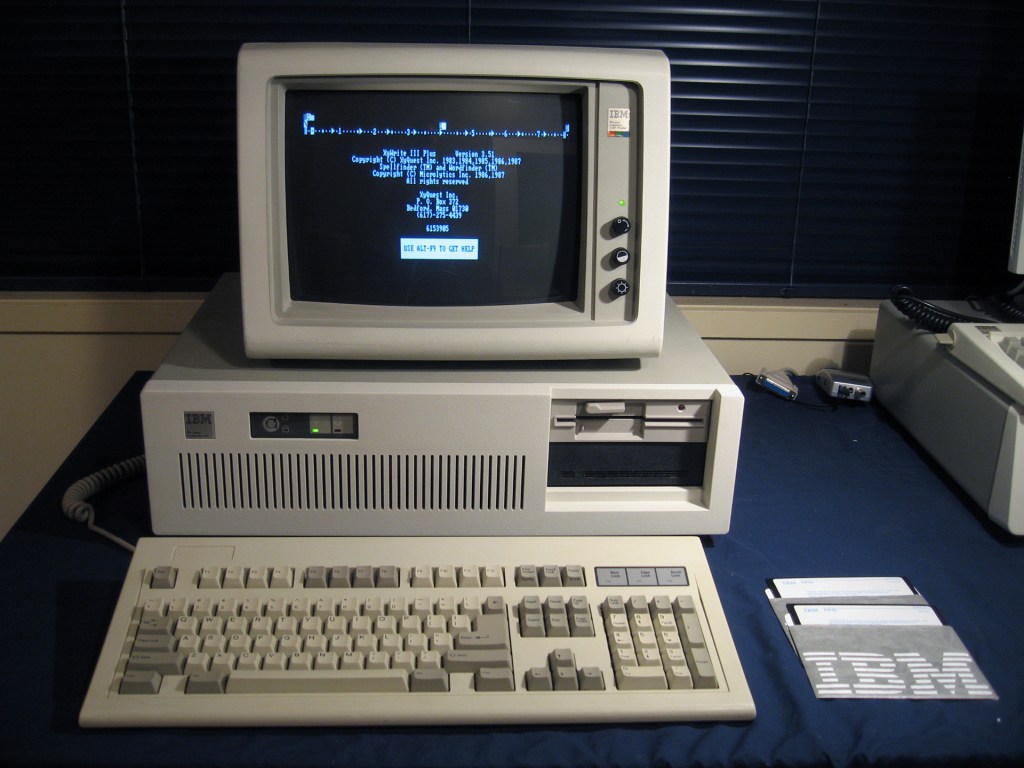
It wasn’t until years later that I realized I didn’t have any clue what the department secretaries did, and I never asked. I was a TA for Philosophy, so I saw my favorite department secretary nearly every day. She was always busily typing, hands flying over the keys, never breaking contact to grasp a mouse.
They didn’t see a problem that needed WordPerfect to solve. They were happy with XyWrite and were never asked about transitioning to new software. A student came in with nothing but a work order and a computer, and he disrupted their environment, materially changed their work, and left them accountable to deliver against tight deadlines with demanding stakeholders.
Despite my unshakable power of self-recrimination, I’m not suggesting that the student worker should have known better. I was wowed by the beauty and majesty of the new computers, and I didn’t know enough to ask how they’d be used. We student workers weren’t equipped with any communication – or communication skills – to help with the transition.
Decades later, the work orders haven’t changed much
The Philosophy Department secretaries are on my mind when I talk to people about AI today. Too many initiatives I’ve seen personally and talked about with the folks in my network play out similarly to the WordPerfect/XyWrite story. It’s a company-wide initiative with little or no vision or strategy. Communication is nonexistent, sparse, or poor. Employees are told what’s changing without anyone trying to understand how they work. There may be a bigger business objective behind the technology transformation. But it isn’t shared.
There’s something deeply sad in the realization that today’s people teams, while receiving PowerPoints, emails, and Slack messages that seem so much fancier, are getting work orders eerily similar to the grey, pointillist notes that once guided my workday.

